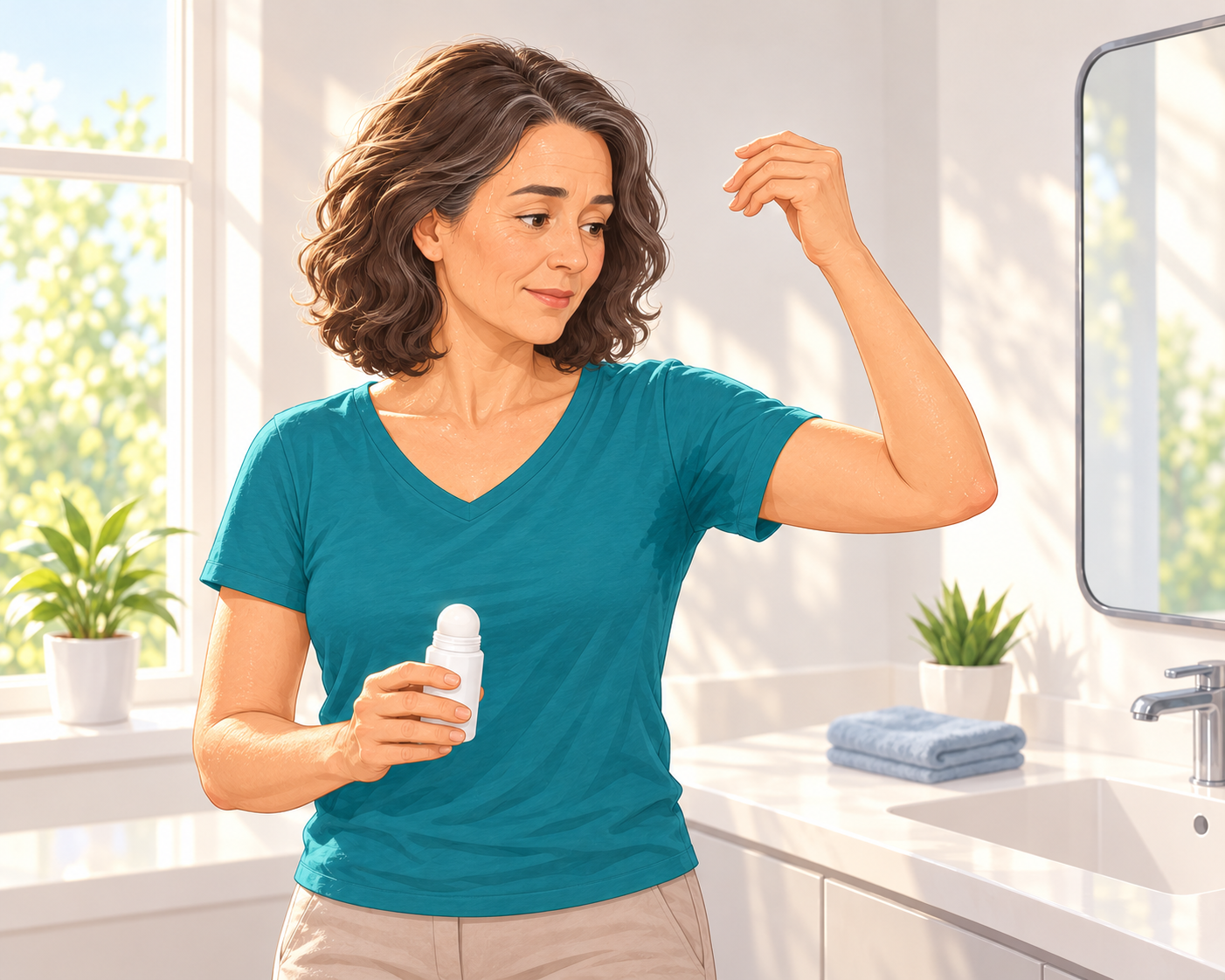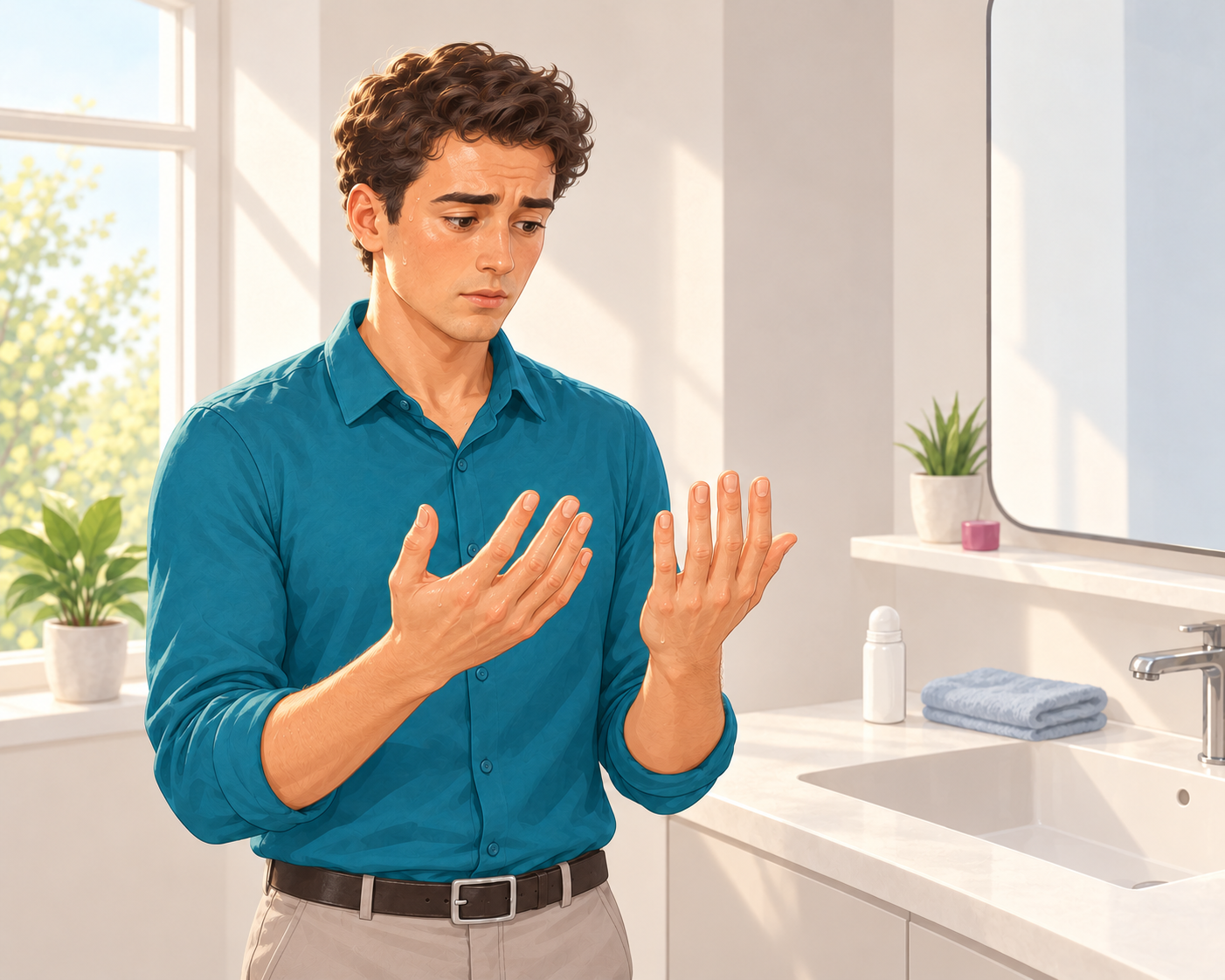



Sweat is vital: it evaporates on the skin and protects the body from overheating. It is therefore normal to sweat during heat, sports, physical labor, fever, or excitement. However, some people feel like they are sweating constantly, even at rest, in cool temperatures, or for no apparent reason.
Constant sweating can affect different areas of the body. Some people primarily have damp armpits, hands, or feet, while others sweat on their head or all over their body. It’s not always caused by an underlying illness. However, if the sweating is new, persists for a long time, or significantly affects daily life, a medical evaluation is advisable.
What does it mean if you sweat constantly?
The term “constant sweating” is not a precise medical diagnosis. It initially describes the perception of sweat production as frequent, persistent, or inappropriate for the situation. This can mean that someone experiences heavy bouts of sweating several times a day, hardly gets dry between episodes, or sweats seemingly without cause.
It’s not just the amount of sweat that matters. There is no universal measurement at which sweating is automatically considered pathological. Frequency, body region, triggers, and the impact on quality of life are also important. If clothes need to be changed several times a day, hands remain permanently damp, or professional and social situations are avoided, excessive sweating may be present.
One possible explanation is primary focal hyperhidrosis. It often begins in childhood or adolescence and usually affects clearly defined areas such as both armpits, hands, feet, or the forehead. Typical features are recurring, involuntary episodes of sweating; symptoms usually subside during sleep. In contrast, permanent sweating all over the body or newly occurring night sweats do not fit this pattern and should be specifically investigated. The AWMF guideline on primary hyperhidrosis cites medical history, symptoms, and impairment of daily life as important foundations for diagnosis.
What causes permanent sweating?
Permanent sweating can be caused by external conditions, personal triggers, or health factors. Heat, physical activity, stress, and excitement naturally increase sweat production. Spicy food, alcohol, nicotine, and large amounts of caffeine can also intensify the reaction in some people.
In primary hyperhidrosis, no other underlying disease can be identified as the cause. The sweat glands are not increased in number but are excessively stimulated by the autonomic nervous system. Secondary hyperhidrosis is different: here, sweat production is the result of another cause.
Possible triggers include:
- hormonal changes, such as during menopause or pregnancy,
- infections and feverish illnesses,
- an overactive thyroid,
- diabetes or recurring low blood sugar,
- certain neurological diseases,
- anxiety disorders or persistent high stress,
- medications, such as some antidepressants, painkillers, hormone preparations, or blood-sugar-lowering agents,
- alcohol, drugs, or withdrawal from certain substances.
Searching for “sweating for no reason” is therefore often misleading: a trigger may be present even if it isn’t immediately obvious in daily life. The timing is particularly helpful. If symptoms begin after a new medication, during a hormonal change, or along with other symptoms, this can point the way for evaluation. Medication should not be discontinued independently if suspected. You can read more about possible backgrounds under causes of heavy sweating. The MSD Manual on hyperhidrosis also provides a medical overview of secondary triggers.
Is constant sweating without exertion a warning sign?
Sweating without exertion is not automatically dangerous. In primary hyperhidrosis, sweat glands can become highly active even at rest, in cool temperatures, or in emotionally tense situations. Similarly, menopause, stress, or certain medications can trigger bouts of sweating without preceding physical strain.
However, medical advice is recommended if the sweating:
- suddenly starts or becomes significantly heavier,
- affects the whole body or only one side of the body,
- occurs regularly at night,
- affects daily life, work, or sleep,
- is accompanied by fever, rapid heartbeat, tremors, or severe exhaustion,
- is accompanied by unexplained weight loss,
- occurs after starting or changing a medication.
Sufferers sometimes describe this as “sweating all day.” If this occurs without recognizable strain, a primary care physician should be consulted first. There, symptoms, medications, and possible accompanying symptoms can be categorized. Depending on the suspicion, a physical examination or blood tests may follow. The NHS patient information on excessive sweating also recommends medical evaluation if self-help measures are insufficient, symptoms persist longer, or occur at night.
Sudden cold sweat combined with chest pain, shortness of breath, fainting, confusion, or severe weakness can be an emergency. In this case, call emergency services immediately. Recurring extreme sweating should also be medically evaluated if no plausible explanation is apparent.
Which products help with permanent sweating?
Deodorants and antiperspirants serve different purposes. A deodorant is primarily intended to prevent or mask unpleasant body odor. An antiperspirant, on the other hand, temporarily reduces sweat release at the treated skin area. For localized heavy sweating, antiperspirants with aluminum salts are often used. They temporarily block the ducts of the sweat glands and are considered an important first treatment option for focal hyperhidrosis according to the AWMF guideline.
Application is key for effectiveness and skin tolerance:
- Apply the antiperspirant in the evening to completely dry, unbroken skin.
- Do not use it immediately after shaving or on irritated skin.
- Observe the frequency of application and contact time for the respective product.
- Discontinue use if severe burning or persistent skin irritation occurs and seek medical or pharmaceutical advice.
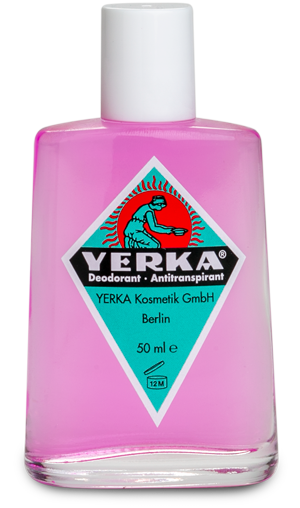
Yerka is a liquid, fragrance-neutral antiperspirant that is individually dosed with a cotton pad. According to the manufacturer, it is dabbed onto cleansed, well-dried skin in the evening and washed off the next morning. Initially, application two to three times a week is recommended. It can be used under the armpits as well as on hands and feet according to the instructions for use. Further details can be found in the Yerka application instructions.
Supplementary products such as underarm pads, absorbent socks, foot powder, or mild washing products can limit moisture, odor, and skin irritation in everyday life. However, they do not reduce sweat production in the same way as an antiperspirant.
How can you manage constant sweating in everyday life?
Some practical measures help identify triggers and reduce the consequences:
- Keep a sweat diary: Record the time, body part, intensity, food, drinks, stress, medications, and accompanying symptoms for two to four weeks.
- Choose airy clothing: Loose-fitting clothes made of breathable materials can better wick away heat and moisture.
- Change clothes and shoes: Spare clothes, moisture-regulating socks, and alternating shoes make daily life easier.
- Test personal triggers: Try reducing spicy food, alcohol, nicotine, or high caffeine intake if you suspect a connection.
- Reduce stress reactions: Calm breathing, exercise, and regular breaks can reduce emotionally induced sweating.
- Drink enough: Drinking less does not reliably prevent sweat production and can strain the circulation.
- Gentle skin care: Wash areas that sweat heavily mildly and dry them thoroughly to prevent irritation.
If everyday tips and antiperspirants are not enough, other treatments may be considered depending on the cause and body region. These include, for example, tap water iontophoresis for hands and feet, medically prescribed active ingredients, or botulinum toxin. The selection should be made individually in a dermatological practice. A comprehensive overview is provided in the guide what helps against sweating.
Conclusion:
Constant sweating can often be significantly reduced. It is important to observe your personal pattern, not to overlook possible health causes, and to apply products correctly. In this way, a solution can be found step by step that fits the body area, the cause, and daily life.