


Moist palms due to heat, exercise, or excitement are a normal bodily reaction. However, if your hands frequently get wet without an apparent reason, it complicates even simple situations: shaking hands becomes uncomfortable, paper wrinkles, touchscreens react poorly, and tools slip from your grasp. What to do about sweaty hands? The appropriate solution depends on how often and how severely palm sweating occurs.
What helps with sweaty hands if the problem occurs only occasionally or persistently? For mild discomfort, practical immediate remedies are often sufficient. Those who sweat regularly should try a suitable antiperspirant and seek medical advice if it doesn’t work. Read more about classification in the overview on sweaty hands.
What immediate remedies are available for sweaty hands?
Immediate measures usually do not completely stop sweat production. However, they can make your palms drier in the short term and alleviate uncomfortable situations:
- Wash your hands with cool to lukewarm water and dry them thoroughly.
- Keep an absorbent cloth or paper towel handy.
- When it’s hot, cool not only your hands but your entire body, for example, by wearing light clothing and finding a shady spot.
- Remove airtight gloves as soon as they are no longer needed.
- Immediately before an important appointment, avoid very hot drinks, large amounts of caffeine, or spicy food if these increase your sweating.
Alcohol-based hand sanitizer may feel dry temporarily, but it is not a remedy for sweaty hands. Frequent use can dry out and irritate the skin. Very cold water also only works briefly and can be unpleasant.
If you want to keep your hands dry before a specific appointment, an antiperspirant should be applied according to the instructions for use, not just a few minutes beforehand. These products need time to build up their effect.
What special antiperspirants are available for hands?
A deodorant primarily targets odor. An antiperspirant, on the other hand, reduces sweat secretion in the treated skin area. For palms, liquid solutions, gels, or creams containing aluminum salts are suitable. The AWMF guideline for primary hyperhidrosis names externally applied antiperspirants as the first stage of treatment for focal palm sweating.
Aluminum salts temporarily block the sweat gland ducts, reducing the amount of sweat that reaches the skin surface. Application is crucial: the product is usually applied in the evening to completely dry, unbroken skin and washed off the next morning. Always follow the manufacturer’s instructions. It should not be used on small wounds, eczema, or irritated skin. Temporary burning, itching, or skin irritation may occur.
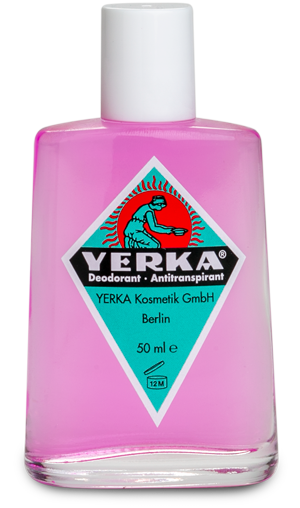
Yerka is a liquid, odor-neutral antiperspirant without alcohol. It contains aluminum chloride in a low concentration and is therefore not aluminum-free. According to the manufacturer, it can also be used for sweating problems on the hands. The liquid can be individually dosed drop by drop with a cotton pad. Details on application are included in the instructions for use; official product information can be found under Yerka – Benefits and Application.
When choosing an antiperspirant for hands, one should therefore not only look at the product form. Equally important are clear dosage instructions, suitability for hands, and individual skin compatibility.
Do powders or creams help with palm sweating?
Powder can absorb moisture and temporarily improve grip. This is practical, for example, before manual activities or during sports. However, it does not inhibit the sweat glands. As soon as the powder is saturated, its effect diminishes; residues can also appear on clothing, paper, or equipment.
Normal hand creams also do not stop palm sweating. However, they can be useful if frequent washing or an antiperspirant dries out the skin. In that case, choose a light, unscented moisturizer and let it absorb completely. Heavily greasy creams can temporarily intensify the slippery feeling.
Antiperspirant hand creams are to be distinguished from these: if they contain a sweat-inhibiting active ingredient and are explicitly intended for the palms, they can reduce sweat production. Check the active ingredients and application instructions instead of relying solely on names like “Dry Hands.”
Therefore, if you want to get rid of sweaty hands, powder should be considered more as a supplement. For a longer-lasting effect, a suitable antiperspirant is usually the more appropriate product choice.
What behavioral tips help in everyday life and with nervousness?
Stress and the worry of visible palm sweating can reinforce each other. Nevertheless, sweating is a real physical reaction and not a matter of lack of self-control. The following tips for sweaty hands can make everyday life easier:
- Keep a sweat diary for two weeks, noting the time, situation, drinks, food, and stress level.
- Before presentations or meetings, plan a few calm breaths: inhale slowly through the nose and exhale longer.
- Carry a small absorbent cloth with you instead of constantly wiping your hands on your clothes.
- Avoid airtight gloves and choose breathable materials for work, if safety regulations permit.
- Drink enough fluids. Less fluid does not reliably prevent palm sweating and can strain the circulatory system.
- Test sequentially whether caffeine, nicotine, alcohol, or spicy foods are personal triggers.
The guide hand sweating explains why palms are particularly sensitive to emotional stimuli. Other everyday situations and possible causes are discussed in the article sweating hands.
The desire to stop sweaty hands is understandable. Relaxation techniques primarily help with stress-related episodes but do not alone treat pronounced hyperhidrosis. If hands regularly remain wet even in calm situations, targeted therapy is more sensible.
What medical treatments are available for severe palm sweating?
If sweating occurs bilaterally, at least weekly, and independently of temperature or exertion, primary palmar hyperhidrosis may be present. It often begins in childhood or adolescence and subsides during sleep. Suddenly new, unilateral, or nocturnal sweating, as well as additional symptoms, should be medically evaluated.
Several treatments are available for severe palm sweating:
- Tap water iontophoresis: Hands are placed in water baths through which a weak direct current flows. Initially, several applications per week are usually necessary, followed by maintenance treatments. According to the AWMF guideline, efficacy and safety for palmar hyperhidrosis are proven by clinical studies.
- Botulinum toxin: Injections interrupt nerve impulses to the sweat glands for several months. Its use on the hands is not regularly approved in Germany and can temporarily weaken hand muscles.
- Systemic medications: Medically prescribed anticholinergics can reduce sweat production throughout the body. Possible side effects include dry mouth, visual disturbances, constipation, or problems with urination.
- Sympathectomy: A surgical intervention on the sympathetic nervous system is only considered for severe, otherwise uncontrollable symptoms. A significant risk is new or increased sweating in other parts of the body.
A dermatologist can determine whether hyperhidrosis of the hands is present and which treatment stage suits individual needs. Medical advice is particularly useful if self-help measures are insufficient, the problem has existed for at least six months, or work and daily life are significantly impaired. These reasons for clarification are also mentioned in the NHS patient information on hyperhidrosis.
Choose the right product now: For occasional moisture, powder can help in the short term. For regularly sweaty palms, a specially suitable antiperspirant is the obvious first product choice. If you are looking for a liquid, odor-neutral, and individually dosable solution, learn more about Yerka and its correct application now, and observe the product instructions before first use. If the desired effect is not achieved, seek advice on iontophoresis or other medical options.