

During menopause, the interplay of hormones changes. Many women experience hot flashes, bouts of sweating, or night sweats and simultaneously notice that they smell different or more intense than before. Body odor during menopause is therefore not uncommon—and not a sign of poor hygiene.
In most cases, the change can be explained by increased sweat, damp clothing, and the natural breakdown of skin secretions by bacteria. However, an unusual odor can also have other causes. It is therefore important to consider the odor pattern, additional symptoms, and whether the problem improves with simple measures.
Why does body odor change during menopause?
From perimenopause onwards, concentrations of estrogen and other hormones fluctuate. This hormonal shift can affect temperature regulation and trigger hot flashes with sudden sweating. It is not the hormones themselves that smell: fresh sweat consists mostly of water and salts and is initially almost odorless. Only when skin bacteria break down components of sweat and other skin secretions do odor-active substances develop.
More moisture under the armpits, in skin folds, or under the breasts creates favorable conditions for this breakdown. Synthetic clothing, certain foods, alcohol, smoking, stress, and some medications can also influence the perceived odor. When it comes to hormonal changes and body odor, several factors usually work together.
An altered body odor in women can also occur independently of menopause. It is worthwhile to consider the timing, body area, and accompanying symptoms separately, instead of automatically attributing every change to hormones.
A sour body odor is often described during menopause. It can occur when sweat remains on the skin or in clothing for a longer period and is decomposed by bacteria. The personal perception of an odor is also subjective. Therefore, a specific smell does not allow for a reliable diagnosis.
A distinctly sweet body odor during menopause, on the other hand, is not one of the typical complaints. In particular, fruity-smelling breath can be related to a severe metabolic derangement in diabetes. If it occurs along with intense thirst, frequent urination, nausea, vomiting, or deep, rapid breathing, immediate medical help is necessary. The guide pancreas body odor explains possible connections with sugar metabolism in more detail.
What role do hot flashes play in this?
Hot flashes and bouts of sweating are among the most common menopausal symptoms. According to the information portal gesund.bund.de, up to two-thirds of women are affected. A hot flash often begins suddenly in the area of the face, neck, or chest and can be accompanied by heavy sweating, skin flushing, and subsequent chills.
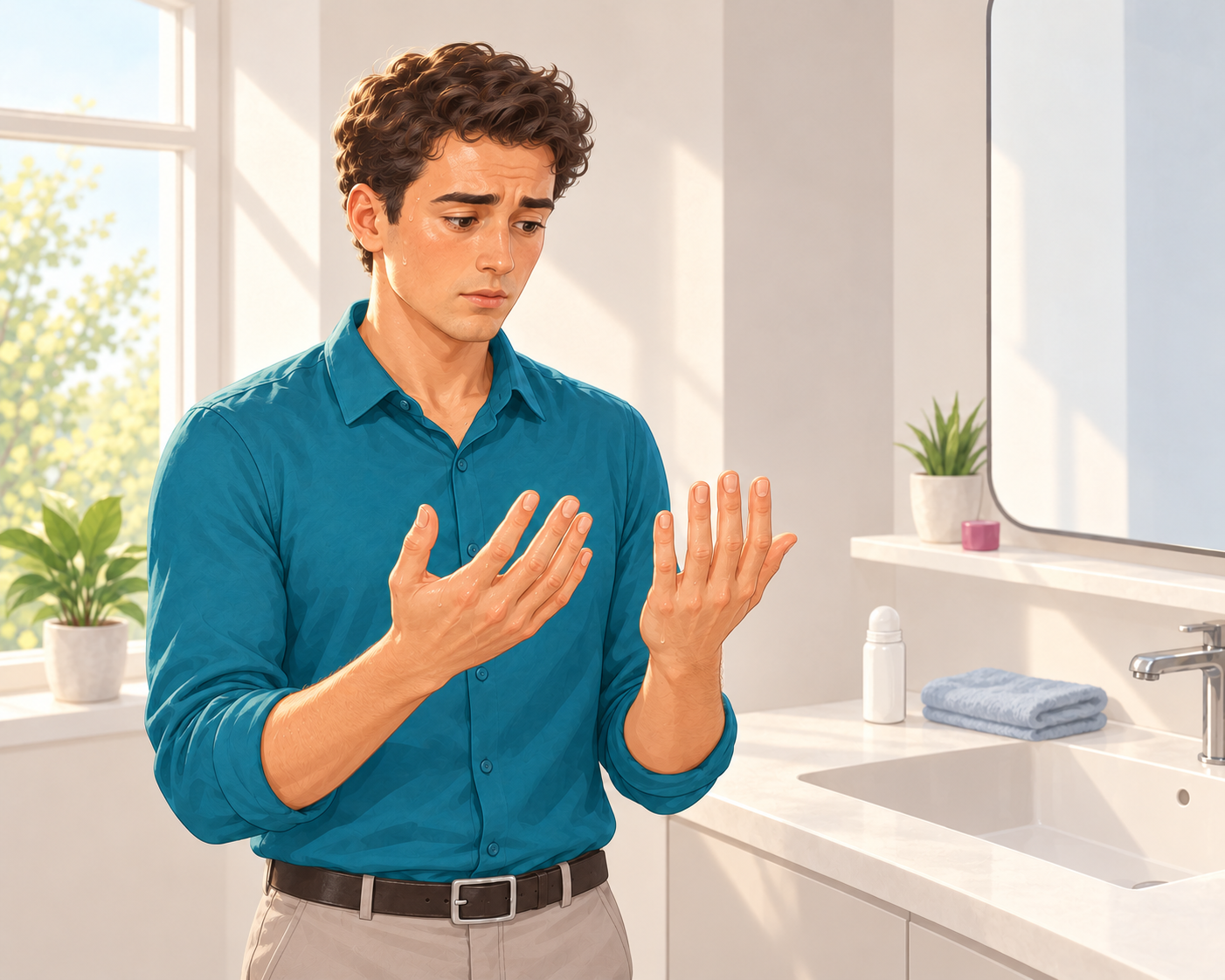
The connection between hot flashes and body odor is primarily indirect: more frequent sweating episodes increase moisture on the skin. If wet clothing or sleepwear remains on the body for a long time, odor-forming bacteria can become more noticeable. At night, sweat is also absorbed into bedding and nightwear.
The perception of odor can differ from episode to episode. Heat, stress, alcohol, caffeine, smoking, and spicy food intensify hot flashes for some women. A diary helps to identify personal triggers. However, heavy bouts of sweating are not always hormonal. The article heavy sweating thyroid shows when a thyroid condition should also be checked.
Which care products help during this phase of life?
Appropriate care should reduce odor and moisture without unnecessarily irritating the skin. Deodorants and antiperspirants fulfill different tasks:
- Mild washing products remove sweat and odor-forming residues. Aggressive or heavily perfumed soaps can irritate dry, sensitive skin.
- Deodorants inhibit odor-forming bacteria or mask odor, but usually do not significantly reduce the amount of sweat.
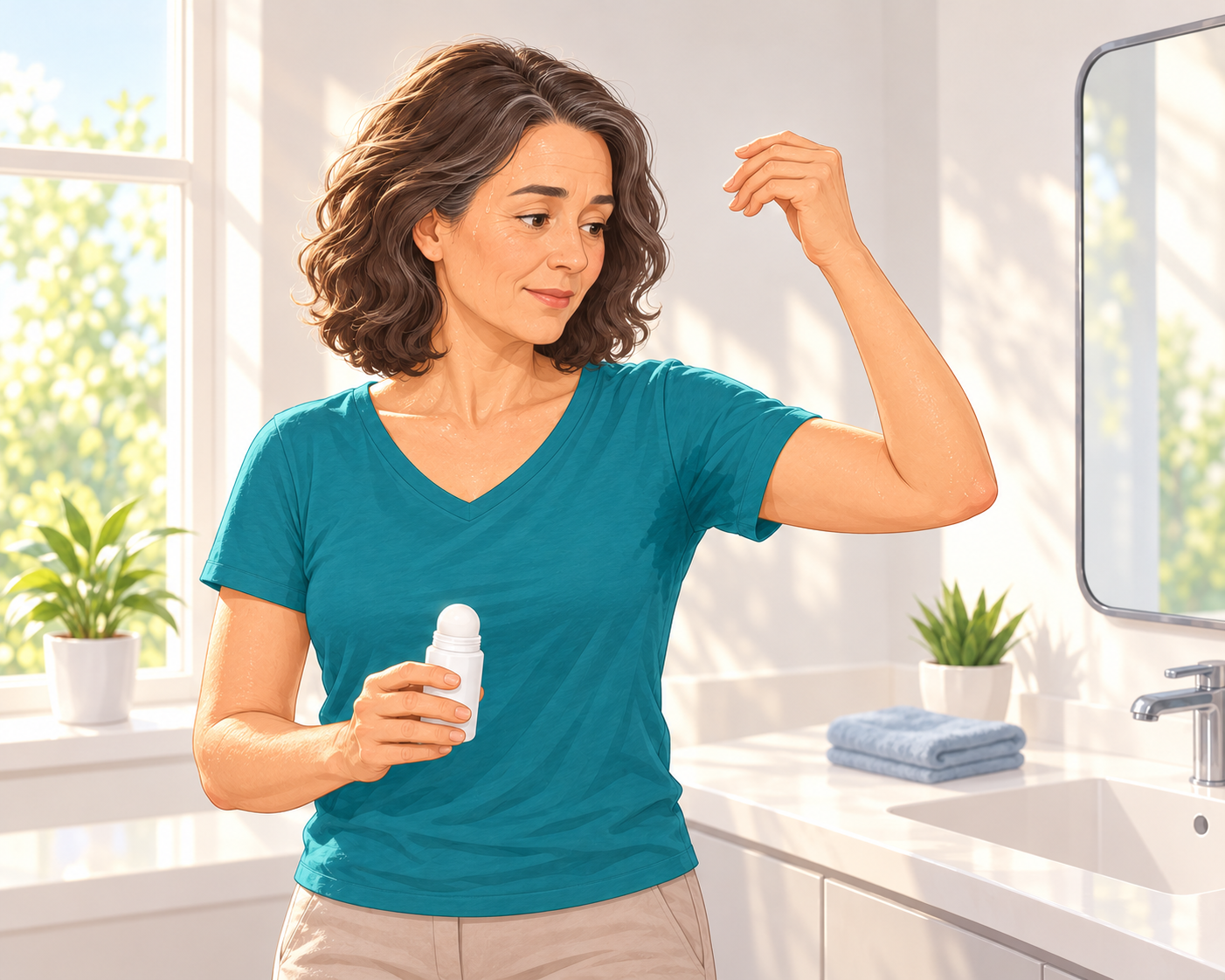
- Antitranspirants temporarily reduce the release of sweat at the treated area. They are particularly suitable if frequent bouts of sweating under the armpits are the actual problem.
- Underarm pads absorb moisture and protect clothing, but do not influence sweat production.
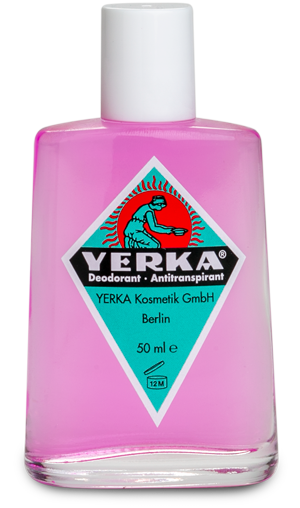
Yerka is a liquid, odor-neutral antiperspirant without alcohol. It contains aluminum chloride in a low concentration and, according to the manufacturer’s instructions, is dabbed onto cleaned, completely dry underarm skin in the evening. The product is not aluminum-free; the active ingredient temporarily reduces sweat release. It should not be used on irritated or freshly shaved skin. The Yerka application instructions are authoritative.
Regardless of the product, sweaty clothes and laundry should be changed promptly. Dry skin folds thoroughly after washing. If areas remain permanently moist or if redness, itching, burning, or scaling skin also occur, an infection may be present. Read more about this under skin fungus sweat.
Which home remedies provide additional relief?
Home remedies cannot end menopause and do not replace treatment for severe symptoms. However, some simple measures can limit hot flashes, moisture, and odor in everyday life:
- Keep living rooms and bedrooms rather cool and use a fan if necessary.
- Wear several light layers of clothing that can be quickly removed during a hot flash.
- Choose breathable fabrics and change damp clothing as soon as possible.
- Take lukewarm showers instead of very hot ones and dry the skin carefully.
- Drink enough water; less fluid does not prevent bouts of sweating.
- Check if spicy food, caffeine, hot drinks, alcohol, or smoking are personal triggers.
- Use relaxation exercises, regular exercise, and calm breathing if stress intensifies the symptoms.
The current NHS recommendation for self-help in menopause also mentions light clothing, a cool bedroom, and reducing personal triggers. For sage tea and other herbal preparations, the effect is not reliably proven; furthermore, herbal active ingredients can have side effects and interactions. Lemon juice, vinegar, or baking soda should not be applied undiluted to sensitive underarm skin, as they can cause irritation.
When should menopausal symptoms be discussed with a doctor?
Speak with your primary care physician or gynecological practice if hot flashes, night sweats, or body odor significantly impair sleep, work, or well-being. An odor that suddenly appears, is unusually strong, or persists despite adjusted care should also be clarified. The article body odor illness offers an overview of possible non-hormonal causes.
Further reasons for a doctor’s visit include:
- heavy sweating along with racing heart, tremors, or unexplained weight loss,
- regular night sweats with fever, cough, or weight loss,
- noticeably sweet-fruity breath with intense thirst, frequent urination, nausea, or breathing problems,
- painful, weeping, or inflamed skin areas,
- symptoms that occur after starting or changing a medication.
Mood swings, anxiety, and depressive moods can also occur during this phase of life. If drive, self-care, or social contacts suffer as a result, this should be addressed openly. The article depression body odor explains possible indirect connections, such as through changed routines, stress, or medications.
Depending on the symptoms, individual counseling, treatment of specific skin problems, or measures against hot flashes may be considered. Hormone therapy can alleviate certain menopausal symptoms, but it is not suitable for every woman and requires a personal benefit-risk assessment.
Body odor during menopause is often a side effect of hot flashes and increased sweating. Mild cleansing, dry skin, breathable clothing, and the right deodorant or antiperspirant are often sufficient. Unusual odors or additional symptoms, on the other hand, should not be prematurely attributed to hormones but should be medically evaluated.