

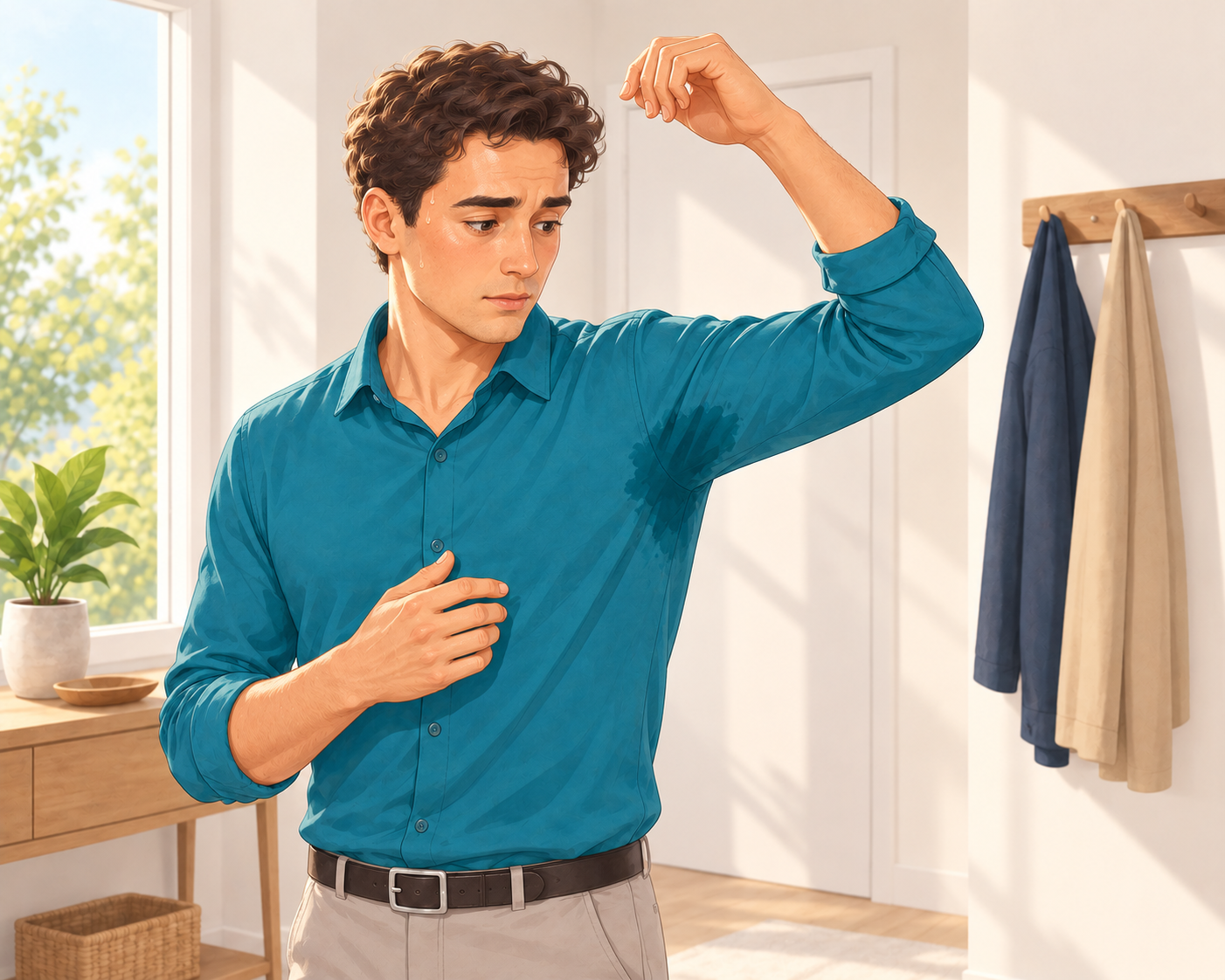
Underarm sweat is initially a normal bodily function. When sweat evaporates on the skin, the body releases heat and protects itself from overheating. Under the arms, however, moisture is particularly noticeable: dark spots on clothing, a damp feeling on the skin, or concern about odor can be unpleasant. Sweaty armpits are therefore not automatically pathological. What matters is whether the amount of sweat fits the situation and how much it affects daily life. The guide sweating under the armpits explores the key connections in depth.
Why do you sweat particularly heavily under the arms?
The armpits contain many eccrine sweat glands. They release a predominantly watery secretion and are controlled by the autonomic nervous system. Heat, exercise, and physical work activate them for cooling. Stress, nervousness, or anxiety can also increase sweat production within a short time. Because the armpit is a warm, poorly ventilated skin fold, moisture evaporates more slowly there than on exposed parts of the body.
Fresh sweat is largely odorless. The typical odor arises primarily when skin bacteria break down components of sweat and other skin secretions. Sweat quantity and odor formation are therefore not the same problem. Read more about how it develops and how to manage it under underarm odor.
How much sweat under the arms is considered normal cannot be answered with a fixed milliliter amount. According to the AWMF guideline on primary hyperhidrosis, excessive sweating is present when sweat production exceeds the requirements of heat regulation. Visible stains alone do not prove a medical condition.
What causes excessive underarm sweat?
Common causes of underarm sweat are high temperatures, movement, excitement, tight clothing, and individual triggers such as alcohol, nicotine, caffeine, or spicy food. Hormonal changes, such as during puberty, pregnancy, or menopause, can also temporarily increase underarm sweating.
If heavy sweating under the arms occurs repeatedly without an appropriate cooling need, primary focal hyperhidrosis may be the cause. In this condition, the sweat glands are not more numerous or larger, but overstimulated. Typical features include onset before age 25, bilateral and symmetrical occurrence, complaints at least weekly, and impairment in daily life. This form usually subsides during sleep. Detailed information is provided in the article heavy sweating under the armpits.
Secondary hyperhidrosis is different. Here, sweating can be triggered by another cause, for example:
- an overactive thyroid,
- diabetes or low blood sugar,
- infections and fever,
- hormonal changes,
- neurological disorders,
- certain medications, such as some antidepressants, painkillers, or hormone preparations,
- alcohol, drugs, or substance withdrawal.
If sweating begins suddenly, occurs at night or all over the body, the cause should be medically clarified. Medications must not be discontinued independently if there is suspicion.
Which home remedies help against underarm sweat?
Many home remedies are recommended, but the scientific evidence is limited. According to the AWMF guideline, there are no controlled studies for sage tea or sage preparations that demonstrate a reliable effect on hyperhidrosis. Lemon juice, vinegar, or baking soda also do not reliably reduce sweat production and can irritate the sensitive underarm skin—especially after shaving.
More sensible are gentle measures that limit heat, moisture, and personal triggers:
- Wash the armpits gently and dry them thoroughly.
- Wear loose-fitting, breathable clothing.
- Check whether alcohol, spicy food, or lots of caffeine increase sweating.
- Keep a fresh top ready to change if needed.
- Use underarm pads if you want to protect clothing from visible moisture.
Underarm pads absorb sweat but do not reduce sweat production. Drinking less is also not a suitable measure: the body needs adequate fluids, especially in heat and during movement.
Which products work most reliably against underarm sweat?
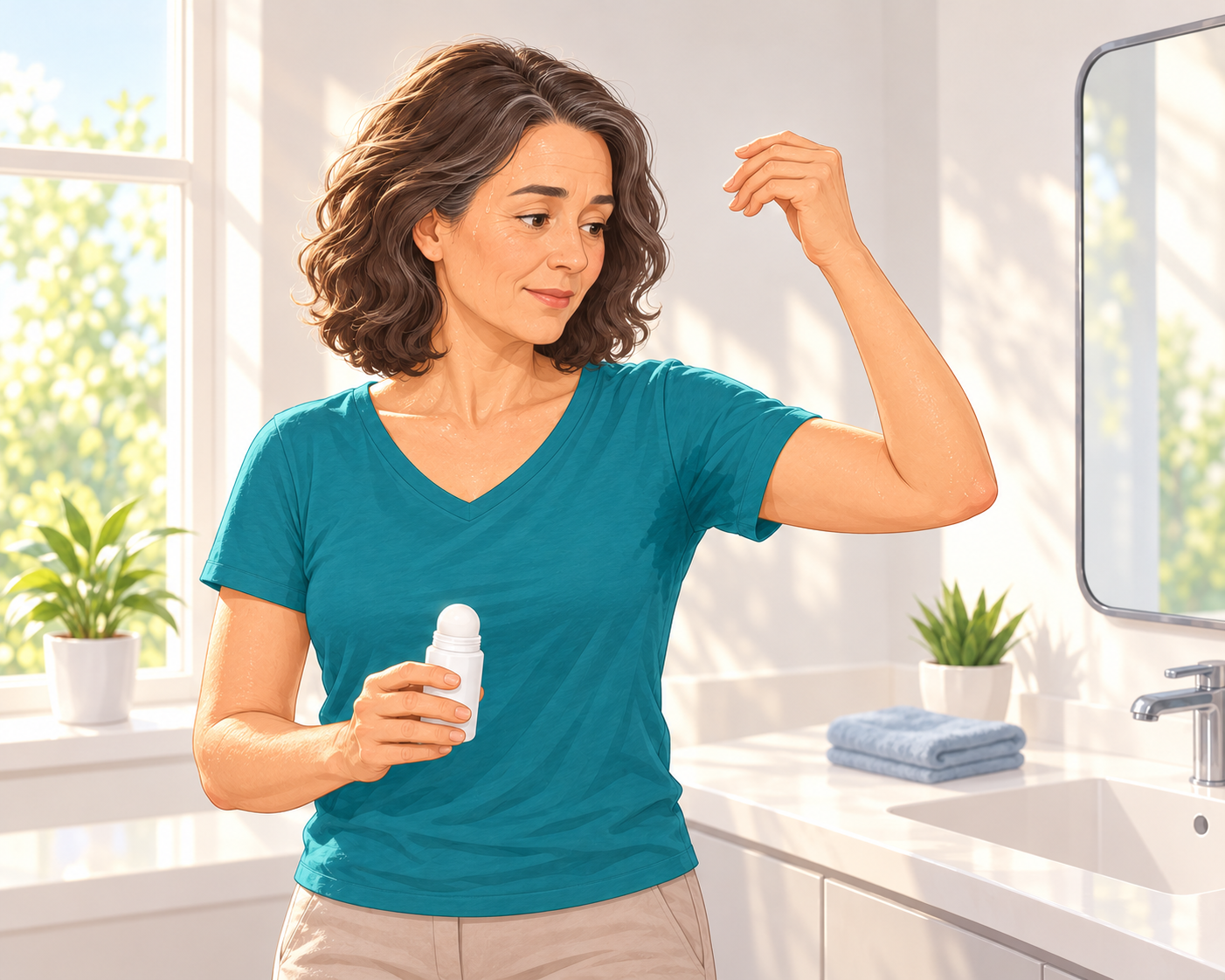
Deodorants and antiperspirants serve different purposes. A deodorant inhibits odor-causing bacteria or masks odor, but usually has little effect on the amount of sweat. An antiperspirant, on the other hand, temporarily reduces sweat secretion at the treated area. For localized excessive sweat production, the AWMF guideline names topically applied antiperspirants with aluminum salts as the first treatment step.
The aluminum salts temporarily narrow or block the ducts of the sweat glands. Correct application is important for effectiveness and tolerability: Apply the product in the evening to completely dry, unbroken skin, not immediately after shaving. Always follow the instructions for use. If burning persists or significant irritation occurs, application should be paused and medical or pharmaceutical advice sought.
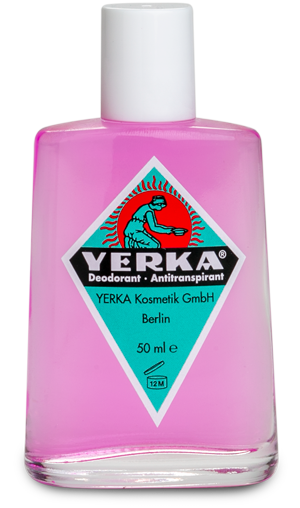
Yerka is a liquid, odor-neutral antiperspirant without alcohol. It contains aluminum chloride in a low concentration and can be applied drop by drop with a cotton pad. According to the Yerka application instructions, a few drops are dabbed onto clean, completely dry underarm skin in the evening, left on overnight, and washed off in the morning. Initially, application is intended two to three times per week; the package insert remains authoritative.
A factual assessment is important regarding aluminum: Aluminum salts are the sweat-reducing active ingredient, but can cause irritation on irritated skin. The Federal Institute for Risk Assessment considers health impairments from daily use of antiperspirants with aluminum chlorohydrate unlikely according to current knowledge. This refers to the evaluated, intended use. Those who wish to avoid aluminum can choose an aluminum-free deodorant, but should not expect comparable sweat reduction. The guide what to do about underarm sweat provides further practical tips.
When does heavy underarm sweat require medical treatment?
A general practitioner or dermatological evaluation is advisable if sweating persists for at least six months, occurs weekly, regularly soaks through clothing, or significantly impairs work, social contacts, and daily life. The NHS patient information on hyperhidrosis also cites duration, frequency, and impact on daily life as reasons for a doctor’s visit. Medical advice is also important if symptoms begin suddenly, occur only on one side, happen at night, or are accompanied by fever, rapid heartbeat, trembling, weakness, or unexplained weight loss.
Diagnosis is based on the symptom pattern, possible triggers, medications, and accompanying symptoms. There is no single threshold value. Depending on the suspicion, an examination, blood tests, an iodine-starch test, or a sweat volume measurement may follow. The article excessive sweating armpits explains the assessment in more detail.
If antiperspirants are not sufficient, medically prescribed topical agents, botulinum toxin injections, certain device-based procedures, or in selected severe cases surgical removal of sweat glands may be considered. The choice depends on the cause, severity, pre-existing conditions, and personal preferences. Sudden cold sweat together with chest pain, shortness of breath, fainting, or confusion is an emergency—call 112.
Underarm sweat can often be significantly reduced. The right approach begins with distinguishing between odor and sweat quantity, gentle skin care, and a correctly applied product. If effectiveness is lacking or the sweating pattern changes, the cause should be medically evaluated.