

Sweating is a vital bodily function. When sweat evaporates on the skin, it draws heat away from the body and protects it from overheating. That’s why it’s normal to sweat in heat, during exercise, with fever, or when you’re nervous. It becomes a burden when sweat stains, clammy hands, or unpleasant odor start to dominate everyday life.
What helps with sweating when normal personal care isn’t enough? That depends on where, when, and how much you sweat. Home remedies and everyday tips can reduce certain triggers or the effects of sweating. If you want to sweat less specifically, you usually need an antiperspirant. If symptoms are pronounced, medical treatments may also be an option.
Which home remedies really help with sweating?
Sage tea and sage extracts are among the best-known recommendations. However, which home remedies help with sweating has not been sufficiently studied scientifically. The current AWMF guideline notes that controlled studies on sage preparations are lacking and that many people with localized hyperhidrosis do not notice sufficient benefit.
Apple cider vinegar, baking soda, and lemon juice are also often recommended. They may temporarily affect body odor or absorb moisture, but they do not reliably reduce sweat gland activity. Acids and baking soda can further irritate sensitive, freshly shaved, or already irritated skin.
More useful are measures that limit known triggers and the effects of sweating:
- gently cleanse heavily sweating skin and dry thoroughly,
- in hot weather, ensure cooling and air circulation,
- watch for personal triggers such as alcohol, spicy food, or stress,
- use underarm pads, foot powder, or absorbent socks to manage visible moisture,
- drink enough—less fluid does not prevent sweating.
These tips for sweating can make everyday life easier. The guide heavy sweating explains why home remedies often aren’t enough as a reliable solution for sweating.
Which antiperspirants and deodorants are most effective?
Deodorants and antiperspirants serve different purposes. A deodorant primarily works against body odor—for example, by inhibiting odor-causing bacteria or by containing fragrances. It usually doesn’t reduce the amount of sweat. An antiperspirant works earlier in the process: it temporarily reduces sweating in the treated area of skin.
Among the most effective over-the-counter options for sweating are antiperspirants with aluminum salts. The salts react in the sweat gland ducts and temporarily form a kind of plug there. This allows less sweat to reach the skin’s surface. The AWMF guideline on primary hyperhidrosis lists aluminum chloride preparations as the first treatment option for localized excessive sweating.
Aluminum chloride in Yerka: explained transparently
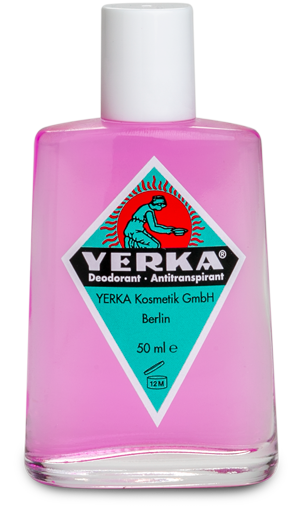
Yerka contains aluminum chloride. This active ingredient is largely responsible for the antiperspirant effect. According to the manufacturer, the concentration of aluminum salts in Yerka is low. In addition, the liquid product is dosed sparingly: for the underarms, a few drops on a cotton pad are usually enough. As long as the skin stays dry, no further application is necessary.
Aluminum in antiperspirants has been debated controversially for many years. Based on current knowledge, the German Federal Institute for Risk Assessment considers health impairments from daily use of aluminum-containing antiperspirants unlikely. The EU Scientific Committee on Consumer Safety also considers aluminum compounds in cosmetics to be safe within the tested use concentrations.
That doesn’t mean the active ingredient can never be unpleasant. Aluminum chloride can cause itching, burning, or redness—especially on damp, freshly shaved, or irritated skin. Yerka should therefore be dabbed on in the evening onto completely dry, unbroken skin, left to work overnight, and washed off in the morning. Do not shave your underarms immediately before use. If irritation occurs, taking a break from use makes sense. The instructions for use are decisive.
Yerka is fragrance-free, alcohol-free, and individually dosable thanks to its liquid form. It’s a suitable choice if a regular deodorant isn’t enough and you mainly want to reduce underarm wetness or sweat stains.
Do diet and clothing help with sweating?
A specific diet cannot cure hyperhidrosis. However, some foods and drinks can intensify the sweating response. Common personal triggers are spicy dishes, very hot drinks, alcohol, and larger amounts of caffeine. Nicotine can also affect sweating.
Instead of avoiding lots of foods as a precaution, a sweat diary can help. For two to three weeks, note when symptoms occur and what you ate or drank beforehand. You can then reduce recurring triggers in a targeted way.
Clothing doesn’t directly change sweat gland activity, but it can wick away heat and moisture better. Loose-fitting clothing and breathable materials are often more comfortable than tight garments made from low-breathability synthetic fibers. For sweaty feet, moisture-wicking socks, rotating shoes, and enough time to dry can help.
What medical treatments are available for heavy sweating?
If a correctly used antiperspirant doesn’t help enough, further treatments are available depending on the body area, cause, and severity:
- Topical anticholinergics: Prescription-only active ingredients can reduce heavy underarm sweating in particular.
- Tap-water iontophoresis: A weak direct current through water is used mainly for sweaty hands and feet. Regular maintenance treatments are necessary.
- Botulinum toxin: Injections temporarily inhibit nerve signals to the sweat glands. The effect usually lasts several months.
- Tablets: Systemic anticholinergics can reduce sweat production throughout the body but may cause side effects. They should be prescribed and monitored by a doctor.
- Device-based or surgical procedures: Heat-based procedures, removal of sweat glands, or interventions on the sympathetic nervous system are usually only considered when gentler measures aren’t enough.
Treatment is usually step-by-step. New, sudden whole-body sweating, regular night sweats, or symptoms with fever, weight loss, palpitations, or severe weakness should be medically evaluated. Learn more at causes of heavy sweating. This also applies to extreme sweating or constant sweating without an identifiable trigger.
How do you find the right option for your needs?
If you’re asking, “What can I do about sweating?”, you should first distinguish the main problem, body area, and severity:
- Mainly unpleasant odor: A deodorant may be enough.
- Damp underarms and sweat stains: Choose an antiperspirant that reduces sweating.
- Heavy localized sweating: An aluminum chloride antiperspirant like Yerka is a sensible first choice.
- Sweaty hands or feet: Use only a product specifically intended for that area. If it’s not effective enough, doctor-supervised iontophoresis may help.
- Whole-body sweating, at night, or sudden new onset: Have the cause checked first.
If you have sensitive skin, the strongest product isn’t automatically the best choice. What matters is using a small amount, applying it to dry, unbroken skin, and choosing a frequency you tolerate well. The guide excessive sweating shows why a step-by-step approach makes sense: observe triggers, test a suitable antiperspirant correctly, and seek medical advice if it’s not effective enough.
If you mainly struggle with underarm wetness, sweat stains, or stress-related sweating and are looking for a fragrance-free, low-dose, and individually applicable antiperspirant, Yerka may be the right choice. Find out more now about how Yerka works and how to use it, or ask for Yerka at your pharmacy using PZN 02448532.